








Editorial note: This article is based on publicly shared company announcements and industry reports. Performance targets and timelines may change as solid-state battery technologies move from testing to large-scale production.
Solid-State Batteries are widely viewed as the next major breakthrough for electric vehicles (EVs), promising higher driving range, faster charging, and improved safety compared with today’s lithium-ion batteries. As of 2026, several global automakers and battery developers are accelerating real-world testing and pilot production of solid-state battery (SSB) systems, bringing the technology closer to commercial use in both the US and European markets.
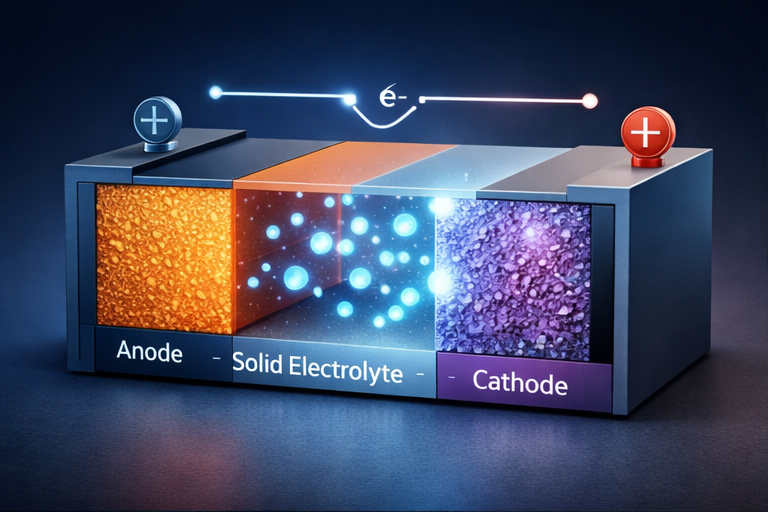
Unlike conventional lithium-ion cells that rely on liquid electrolytes, solid-state batteries use a solid electrolyte to transport lithium ions. This fundamental change allows for higher energy density, better thermal stability, and the potential to dramatically shorten charging times-two of the most important factors for large-scale EV adoption.
What Is a Solid-State Battery?
A solid-state battery is a type of rechargeable battery that uses a solid electrolyte instead of the liquid or gel electrolyte found in conventional lithium-ion batteries. In a solid-state battery, lithium ions move through this solid layer between the anode and the cathode during charging and discharging. This design improves safety by eliminating flammable liquids and also enables the use of high-energy electrode materials, such as lithium-metal anodes, which can significantly increase energy density. As a result, solid-state batteries are widely considered a key next-generation technology for electric vehicles, portable electronics, and future energy-storage systems in both the US and European markets.
Toyota Solid-State Battery Breakthrough for Electric Vehicles (2027–2028 Timeline)
Japanese automaker Toyota has positioned itself as one of the most aggressive leaders in solid-state battery development. Through its collaboration with Idemitsu Kosan, the company is focusing on sulfide-based solid electrolytes designed for high performance and scalable manufacturing.
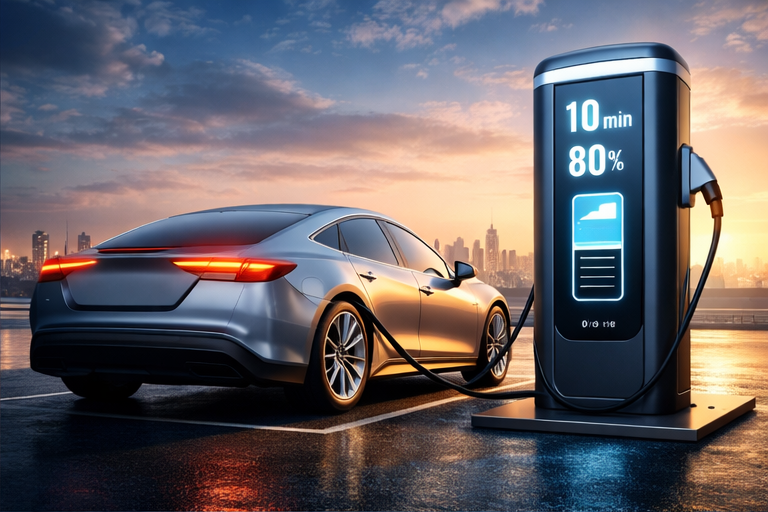
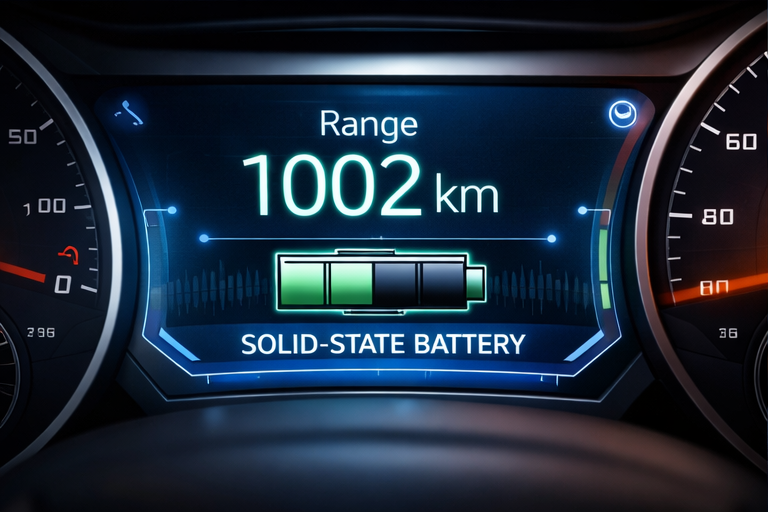
According to company statements, Toyota’s first generation of solid-state batteries is targeting driving ranges of around 1,000 km (approximately 621 miles) and charging times close to 10 minutes for partial recharging. A higher-performance version is also under development, with longer range targets aimed at future premium and long-distance electric vehicles.
While these figures represent technical targets rather than guaranteed commercial performance, Toyota’s roadmap suggests pilot production and early deployment between 2027 and 2028.
BMW and Mercedes-Benz Solid-State Battery Programs in Europe
European automakers are focusing on introducing solid-state batteries first in high-end and technology-focused vehicle platforms.
BMW and Solid Power
BMW is working with US-based battery developer Solid Power to validate all-solid-state battery cells in automotive test vehicles. These programs are aimed at evaluating durability, safety, and real-world performance under European driving conditions.
The current focus is not mass production, but large-scale validation that can support future integration into premium electric models.
Mercedes-Benz and Factorial Energy
Mercedes-Benz has partnered with Factorial Energy to test lithium-metal solid-state battery technology. Early prototype vehicles have already been used for on-road evaluation.
The companies are targeting meaningful improvements in energy density compared with conventional lithium-ion batteries, which could enable longer range or lighter battery packs in future electric sedans and luxury vehicles.
QuantumScape Solid-State Battery Technology in the United States
In the United States, material science and cell engineering are major drivers of solid-state battery innovation. QuantumScape is developing an anode-free solid-state lithium-metal cell architecture designed specifically for automotive use.
The company’s latest automotive-format cells are designed to deliver high energy density and improved safety by eliminating flammable liquid electrolytes. Endurance testing conducted in collaboration with Volkswagen PowerCo has demonstrated strong capacity retention over extended charge-discharge cycles, supporting the long-term durability requirements of electric vehicles.
QuantumScape’s technology is currently positioned for pilot-scale deployment rather than immediate mass-market production.
Why Solid-State Batteries Are Considered a Major Disruptor
Solid-state batteries are attracting intense attention across the US and Europe because they address several structural limitations of today’s lithium-ion technology.
- Improved safety
Solid electrolytes are non-flammable, significantly reducing the risk of thermal runaway and fire.
- Higher energy density
Lithium-metal anodes and compact solid electrolytes allow more energy to be stored in a smaller and lighter battery pack.
- Better vehicle efficiency
Reduced battery weight improves driving efficiency, handling, and overall vehicle performance.
- Longer operational life
Early test data indicates that solid-state cells could offer extended cycle life, potentially supporting long-term vehicle ownership and secondary energy-storage use.
These advantages make solid-state batteries one of the most promising technologies for next-generation electric vehicles and future clean-energy systems.
Market Outlook for Solid-State Batteries: The 2030 Tipping Point
While 2026 marks an important phase for pilot production and prototype vehicles, large-scale commercial adoption of solid-state batteries is expected later in the decade.
Manufacturing costs, production yield, and supply chains for advanced electrolyte materials—such as sulfide and oxide solid electrolytes—remain major challenges. However, industry roadmaps suggest that costs will gradually decline as production volumes increase and manufacturing processes mature.
By the early 2030s, solid-state batteries are expected to begin moving beyond premium and demonstration vehicles into broader electric vehicle segments in both the North American and European markets.
Solid-State Battery Leaderboard (2026 Industry Status)
| Manufacturer | Technology Partner | Key Technical Focus | Estimated Launch Stage | Primary Market |
| Toyota | Idemitsu Kosan | ~1,000 km range, fast charging, sulfide solid electrolyte | 2027–2028 (early production) | Global mass-market EVs |
| QuantumScape | Volkswagen PowerCo | Anode-free solid-state cells, high durability | 2026 (pilot programs) | US and Europe |
| BMW | Solid Power | All-solid-state battery validation in vehicles | 2026 (testing phase) | Luxury and performance EVs |
| Samsung SDI | Internal development | High volumetric energy density, long-life designs | 2027 (early deployment) | Premium SUVs and advanced EV platforms |
| Mercedes-Benz | Factorial Energy | Lithium-metal solid-state electrolyte systems | 2026 (road testing) | Luxury electric sedans |
The Future of Solid-State Battery Technology
The future of solid-state battery technology is set to disrupt the electric vehicle (EV) and consumer electronics markets across the US and Europe. By swapping out flammable liquid electrolytes for highly stable solid materials, next-generation solid-state batteries deliver a breakthrough combination of ultra-fast charging, enhanced safety, and unprecedented energy density. For American and European automakers, this innovation is the key to unlocking EVs with significantly longer driving ranges—easing consumer range anxiety and accelerating the transition to sustainable, zero-emission transportation. As the global race to scale manufacturing intensifies, overcoming current production costs will make solid-state energy storage the ultimate game-changer for a greener, electrified future.